 Add to Chrome
 Add to Firefox
 Add to Edge
The Sword, Shield, and Achilles' Heel: Characterizing the Linguistic Inductive Bias of Large Language Models for Spatial Reasoning in Navigation Planning
May 29, 2026
Large Language Model (LLM)-based navigation systems commonly construct explicit spatial representations (e.g., topological graphs, semantic raster maps) and translate them into textual descriptions as LLMs' inputs. However, the linguistic structures of such text-based spatial representations and the choices of contextual features (e.g., topology, geometry) they contain are often treated as neutral engineering decisions rather than key factors that shape LLMs' behavior. To fill the gap, we propose a dual-interventional framework that disentangles linguistic structures from different contextual cues to evaluate the linguistic inductive bias of LLMs for navigation planning. In the framework, representation intervention varies the linguistic format and the degree of linguistic compression, clarifying when linguistic representations support or inhibit navigation planning. Context intervention, combined with contextual feature combination and conflict probing, explicitly clarifies the preferences and weaknesses of LLMs when processing different contextual cues. Experiments across diverse spatial reasoning tasks and multiple model scales reveal a consistent pattern: topological information is a sturdy shield and the backbone of robust planning; linguistic format is a double-edged sword whose effect depends on model size, task demands, and the compression level; and semantic information is a fatal Achilles' heel -- incorrect semantic cues can systematically derail the planning process. Overall, our study shows that effective text-based spatial representations in LLM-based navigation should preserve topological integrity, calibrate representational compression to model capacity, and ensure semantic correctness, rather than simply adopting a single representation. Our code is publicly available at https://github.com/jonesdong150/LLM-Navigation-Inductive-Bias.

GAM: Hierarchical Graph-based Agentic Memory for LLM Agents
Apr 14, 2026To sustain coherent long-term interactions, Large Language Model (LLM) agents must navigate the tension between acquiring new information and retaining prior knowledge. Current unified stream-based memory systems facilitate context updates but remain vulnerable to interference from transient noise. Conversely, discrete structured memory architectures provide robust knowledge retention but often struggle to adapt to evolving narratives. To address this, we propose GAM, a hierarchical Graph-based Agentic Memory framework that explicitly decouples memory encoding from consolidation to effectively resolve the conflict between rapid context perception and stable knowledge retention. By isolating ongoing dialogue in an event progression graph and integrating it into a topic associative network only upon semantic shifts, our approach minimizes interference while preserving long-term consistency. Additionally, we introduce a graph-guided, multi-factor retrieval strategy to enhance context precision. Experiments on LoCoMo and LongDialQA indicate that our method consistently outperforms state-of-the-art baselines in both reasoning accuracy and efficiency.
Stop Wasting Your Tokens: Towards Efficient Runtime Multi-Agent Systems
Oct 30, 2025While Multi-Agent Systems (MAS) excel at complex tasks, their growing autonomy with operational complexity often leads to critical inefficiencies, such as excessive token consumption and failures arising from misinformation. Existing methods primarily focus on post-hoc failure attribution, lacking proactive, real-time interventions to enhance robustness and efficiency. To this end, we introduce SupervisorAgent, a lightweight and modular framework for runtime, adaptive supervision that operates without altering the base agent's architecture. Triggered by an LLM-free adaptive filter, SupervisorAgent intervenes at critical junctures to proactively correct errors, guide inefficient behaviors, and purify observations. On the challenging GAIA benchmark, SupervisorAgent reduces the token consumption of the Smolagent framework by an average of 29.45% without compromising its success rate. Extensive experiments across five additional benchmarks (math reasoning, code generation, and question answering) and various SoTA foundation models validate the broad applicability and robustness of our approach. The code is available at https://github.com/LINs-lab/SupervisorAgent.
QHARMA-GAN: Quasi-Harmonic Neural Vocoder based on Autoregressive Moving Average Model
Jul 02, 2025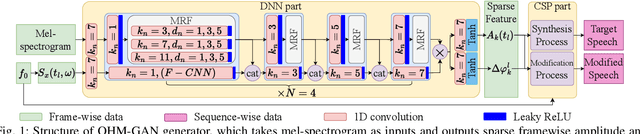
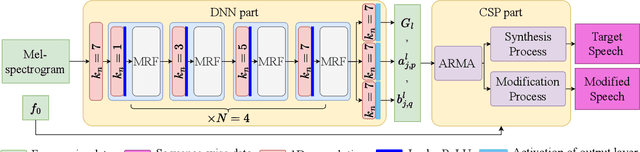
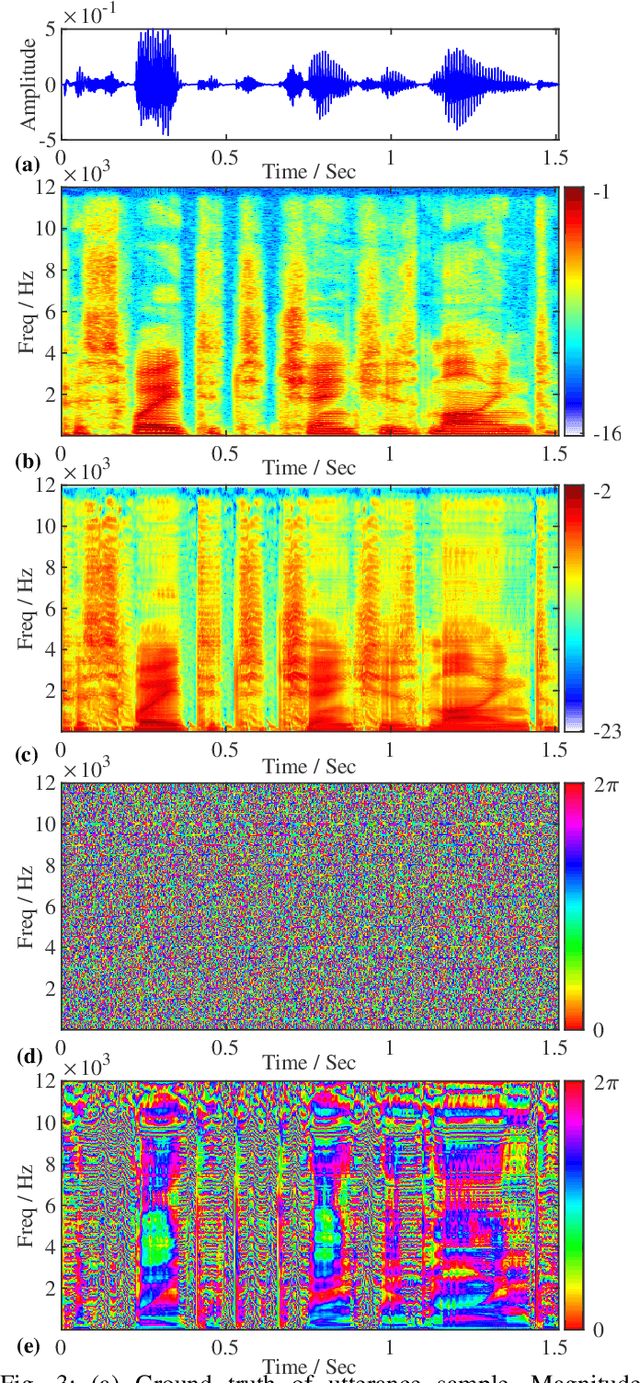
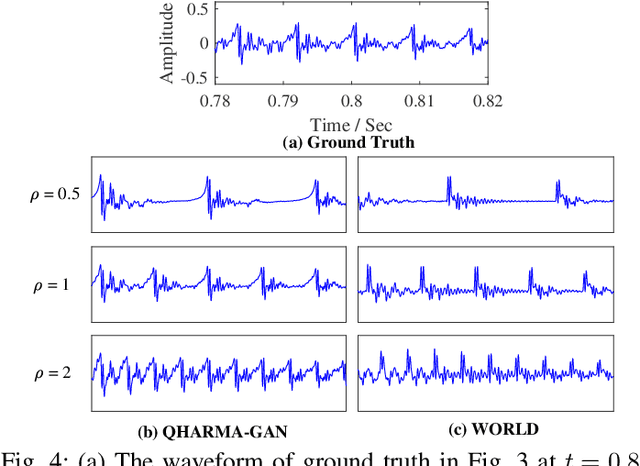
Vocoders, encoding speech signals into acoustic features and allowing for speech signal reconstruction from them, have been studied for decades. Recently, the rise of deep learning has particularly driven the development of neural vocoders to generate high-quality speech signals. On the other hand, the existing end-to-end neural vocoders suffer from a black-box nature that blinds the speech production mechanism and the intrinsic structure of speech, resulting in the ambiguity of separately modeling source excitation and resonance characteristics and the loss of flexibly synthesizing or modifying speech with high quality. Moreover, their sequence-wise waveform generation usually requires complicated networks, leading to substantial time consumption. In this work, inspired by the quasi-harmonic model (QHM) that represents speech as sparse components, we combine the neural network and QHM synthesis process to propose a novel framework for the neural vocoder. Accordingly, speech signals can be encoded into autoregressive moving average (ARMA) functions to model the resonance characteristics, yielding accurate estimates of the amplitudes and phases of quasi-harmonics at any frequency. Subsequently, the speech can be resynthesized and arbitrarily modified in terms of pitch shifting and time stretching with high quality, whereas the time consumption and network size decrease. The experiments indicate that the proposed method leverages the strengths of QHM, the ARMA model, and neural networks, leading to the outperformance of our methods over other methods in terms of generation speed, synthesis quality, and modification flexibility.